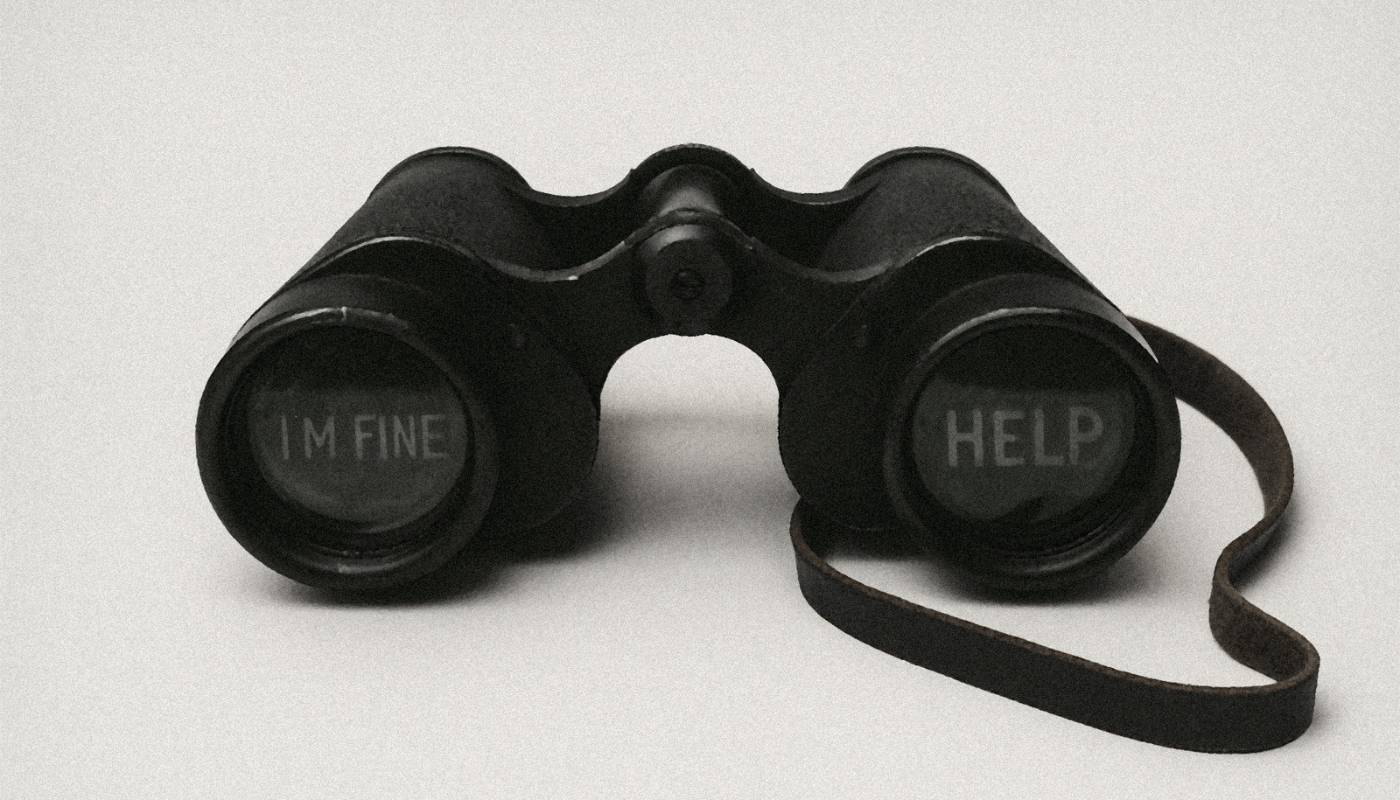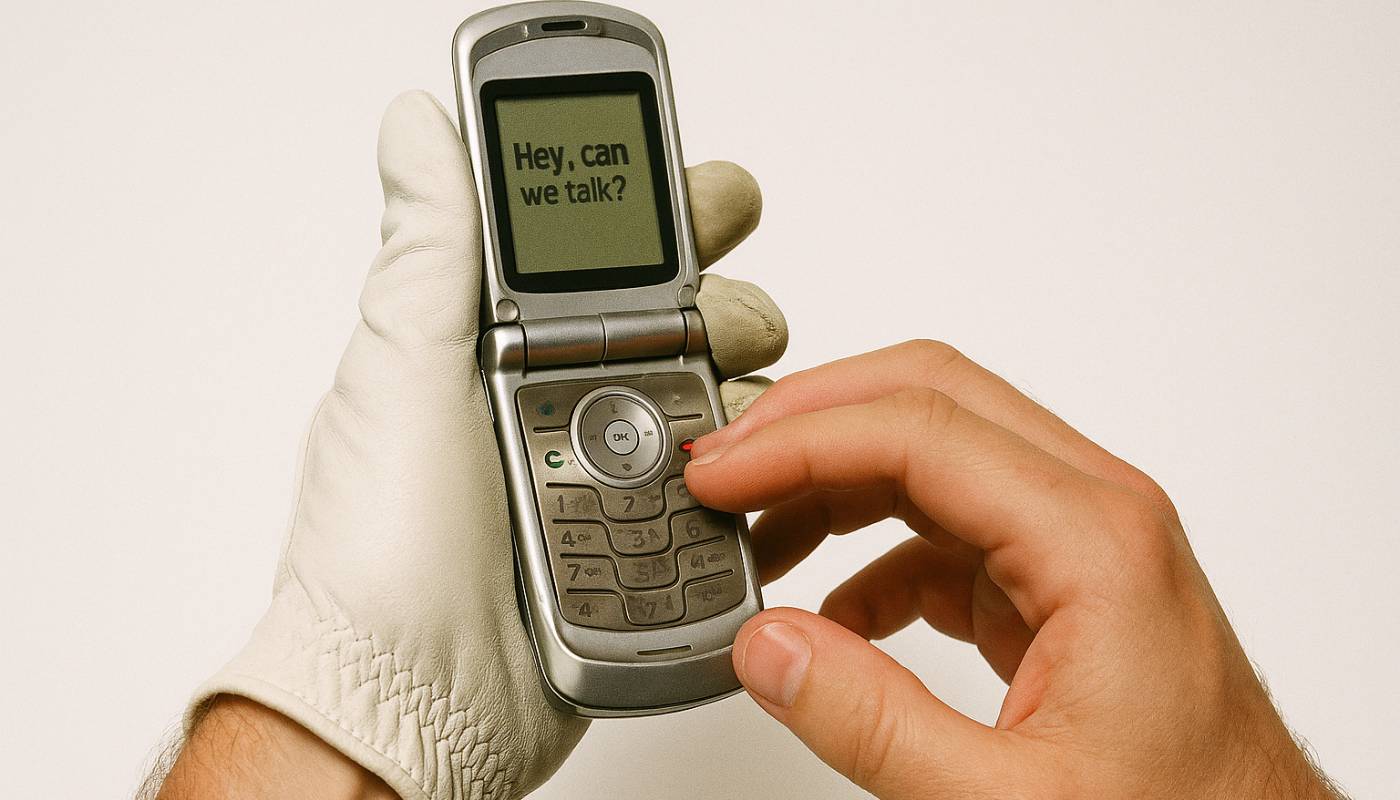


Ask a golfer to explain his last miss and you’ll get five minutes on swing path, contact, and grip pressure, with diagrams if you’re unlucky. Ask him how he’s doing and, more often than not, you’ll get two words: “I’m fine.”
You’re asked how you are every day: by your partner, your boss, the bloke behind the counter at the petrol station. How often do you answer “I’m fine”?
We all know we do it - most of the time, “fine” is out before the question has even finished.
Quick takeaways
"Fine. You?"
The question and the answer have become so automatic that, a lot of the time, neither side expects anything real to come back. The asker isn’t really asking, and the answerer isn’t really answering.
Usually that’s harmless. But not always.
In a 2018 Time to Change survey of over 2,000 people, 78% said they’d tell friends and family they were fine even when they were struggling with their mental health.
{{divider-main="/content-templates"}}
Why bother?
“Fine” is quick and polite, and nobody’s ever been told off for saying it. But when you’re not fine, it leaves the people around you with no idea, and they can’t help with something they don’t know about.
It’s a bit like warming up before a round. Walk straight from the car to the first tee without a single practice swing, and the opening drive usually shows it. A few swings beforehand make the real one feel normal. Small honest answers on ordinary days do the same job. If you’ve said “bit knackered this week” a few times, then “I’m struggling, actually” is much less of a leap if you ever need to say it.
And when you say something truer than “fine”, the other person often will too.
This November is Men’s Health Awareness Month, and a great time to challenge that.
And there are 2 sides to this: The question is too small, and the answer is too easy. Both can change, and neither needs a speech.
{{divider-main="/content-templates"}}
If you’re the one being asked
Nobody’s expecting a TED Talk at the coffee machine, and there’s no rule that says you have to open up to the bloke at the petrol station. But when someone you trust asks, there’s a lot of room between “fine” and your whole life story.
Most of the time, one extra sentence is plenty. Something true, said in passing, the same way you’d mention the traffic was bad on the way in:
- “Fine, but I’ve been knackered and not sleeping well.”
- “Not great, to be honest.”
- “Bit off this week. Can’t put my finger on why.”
None of those need a follow-up meeting. They just give the other person something to work with.
If you’re not sure what to say, ask yourself: if you had to answer in a sentence, not a word, what would you say?
{{crisis-main="/content-templates"}}
{{divider-main="/content-templates"}}
If you’re the one asking
A lot of us have at some point asked “how’s it going?” on the way past without really waiting for an answer. So if you do want to know, it helps to make that obvious. There’s no perfect question. What matters is showing you’ve got time for the answer.
Here are a few things to try out:
Ask a more specific question.
“How has your week been so far?” invites more than “How are you?” does.
Asking twice.
The first “fine” is often on autopilot. A second, gentler go, something like “yeah, but how are you actually?”, tells them you heard the answer and you’re still standing there.
Point out what you’ve noticed.
“You’ve been a bit quieter than usual recently. Are you OK?” works because it’s about what you’ve seen, not what you’ve decided is wrong with them. It gives them something real to respond to.
Offer a scale.
“How are you on a scale of 1 to 10?” is a question we use to open all of our podcast episodes on Fairways and Feelings. Golfers will happily tell you their handicap, their best round and exactly how far they hit a 7-iron, so a number often comes easier than a feeling. And “about a six” opens a door that “fine” tends to keep shut.
{{divider-main="/content-templates"}}
When fine is the answer
Sometimes you’ll ask twice and still get “fine”. That’s alright. It might be true. It might also be someone keeping something private for now, which is their call to make. Pushing harder rarely helps, and it can make the next conversation less likely.
Something like “Good. Well, the offer’s there if that changes” says what needs saying. Then you can let it go, and they know where you are if they need you.
None of this is about getting anyone to tell you everything. It’s about making the question feel like a real one.
You’ll get plenty of chances this week: at work, at home, on the course, or in the car park after the round.
So whichever side of the question you end up on, it might be worth trying one more sentence, or one more ask, and seeing what comes back.
If you have concerns about your mental health or well-being, please speak to a qualified health or mental health professional.