%20(13).avif)

.jpg)
Looking after your mental health can sound like a big, serious project.
A journal. A tracker. A breathing app. Possibly a man on a podcast explaining how he wakes up before sunrise and has somehow become immune to stress, tiredness and normal trousers.
Thankfully, most of the useful stuff is much more ordinary.
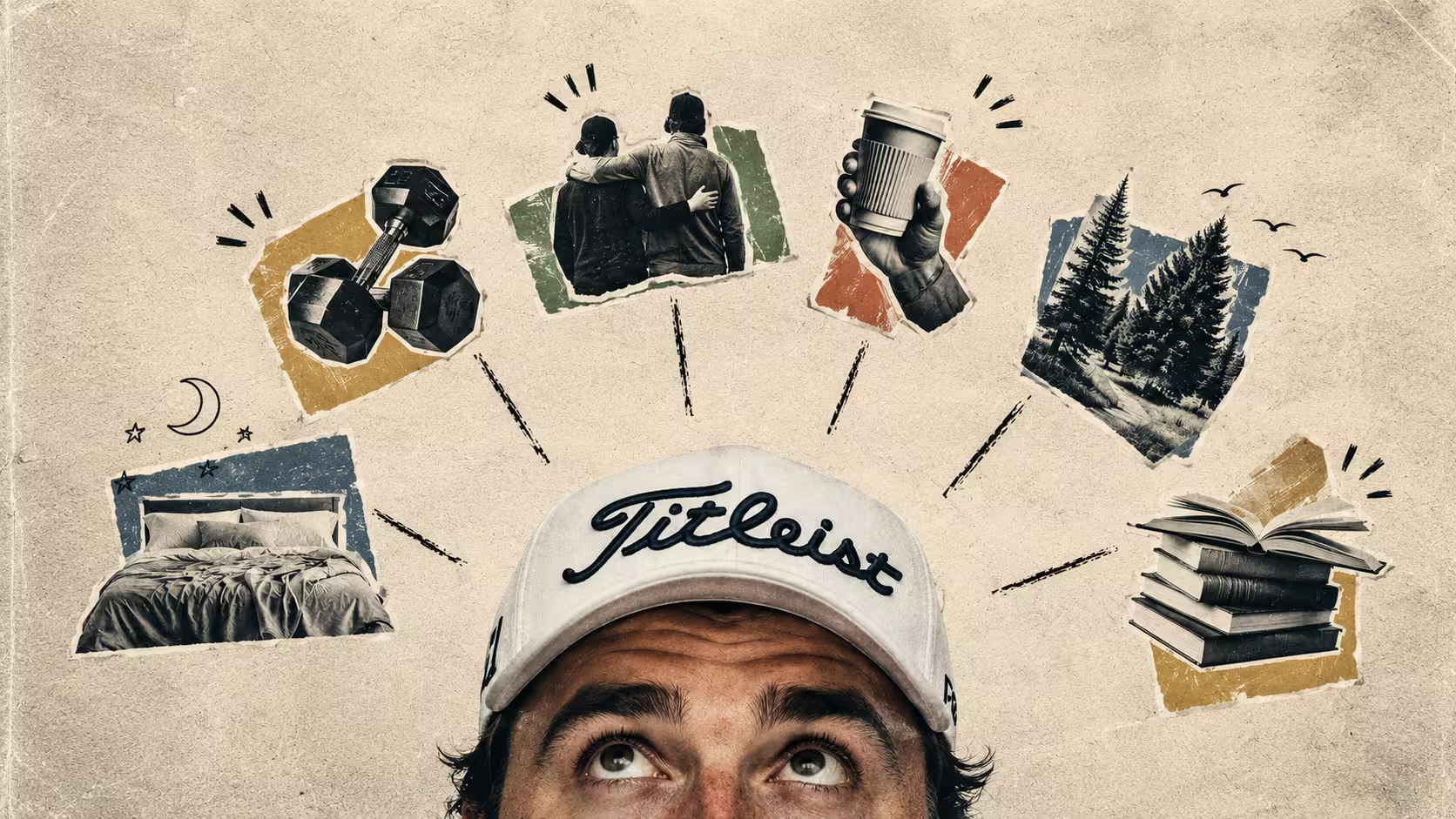
There are small things that, done regularly, can make a real difference to how you feel. Sleep. Movement. Proper connection. Helping someone. Spending time outside. Learning something new.
Nothing revolutionary. Nothing requiring a full personality rebrand or a subscription with a minimalist logo.
Think of it like looking after your clubs. Cleaning them once a year in a panic is better than nothing, but regular care tends to work better. Annoying, because “regular care” sounds like something said by a dentist, but you get the point.
Mostly, they look after the boring foundations: sleep, energy, patience, confidence, and your ability to cope when life starts lobbing range balls at your head.
Quick takeaways
1. Sleep consistently
Sleep is the unsexy king of mental wellbeing.
It affects your mood, patience, concentration, stress, appetite, motivation, and your ability to respond to minor inconvenience like a functioning adult.
The useful bit is consistency. Your brain and body tend to work better with a rhythm: a steady bedtime, a steady wake-up time, and some kind of wind-down that tells your system the day is ending.
Launching straight from emails, house jobs or doom-scrolling into bed gives your brain very little chance to settle. It is a bit like walking onto the first tee halfway through an argument and expecting a smooth takeaway.
One perfect night of sleep can help, of course. But sleep works best when your body starts to trust the pattern.
Golfers understand this. One good swing feels lovely. A repeatable swing changes the round.
Try this:
Pick a realistic bedtime and wake-up time for the next five nights, if your week allows it. Keep them within the same 30-minute window.
That’s the whole thing. Give your brain a routine it can recognise without needing a committee meeting.
{{divider-main="/content-templates"}}
2. Move your body
Movement helps your head because your head is attached to your body, a design feature humans forget with impressive consistency.
This can be a walk, a gym session, nine holes, a swim, a stretch, or a slightly embarrassing living room mobility routine while the kettle boils.
You are aiming for regular movement that suits your body, not punishment dressed up as discipline.
Lots of people wait to feel motivated before they move. Lovely idea. Patchy results.
Often, the body goes first and the mind follows. For many people, a short walk can reduce stress, lift your mood, help you sleep, and give your brain something else to do besides sitting in its own soup.
It changes the channel a bit, which can be surprisingly useful when your head has been playing the same rubbish episode all morning.
Golf counts, by the way.
Walking 18 holes. Carrying a bag. Loosening up at the range. Chasing your ball into a hedge with the grim determination of a man searching for lost treasure.
All movement. Some dignity lost, maybe. Still movement.
Try this:
Do ten minutes of extra movement before lunch tomorrow.
Walk round the block, stretch, hit a few balls or take the stairs. Keep it laughably achievable.
{{divider-main="/content-templates"}}
3. Connect with someone properly
A lot of people technically connect all day through messages, likes, group chats and voice notes long enough to require chapters.
It can keep us busy while still leaving us oddly separate from everyone.
Proper connection is different.
It means giving someone your actual attention and having a conversation that goes one inch deeper than weather, traffic, handicaps or the moral collapse of slow play.
It helps. Usually not in a dramatic, film-ending sort of way. More in the quiet sense that your brain remembers life is not just tasks, worries and the WhatsApp you meant to answer three days ago.
Golf is good for this because it gives conversation room to breathe. Walking side by side helps. Eye contact is optional. Silence can sit there without making everyone panic. Things can come out sideways, which is often how humans prefer it.
Nobody has to announce that a meaningful conversation is now beginning. Thank God.
Everyone can just walk, talk, look for balls, talk a bit more, and occasionally pretend they meant to hit a low punch under the branches.
Try this:
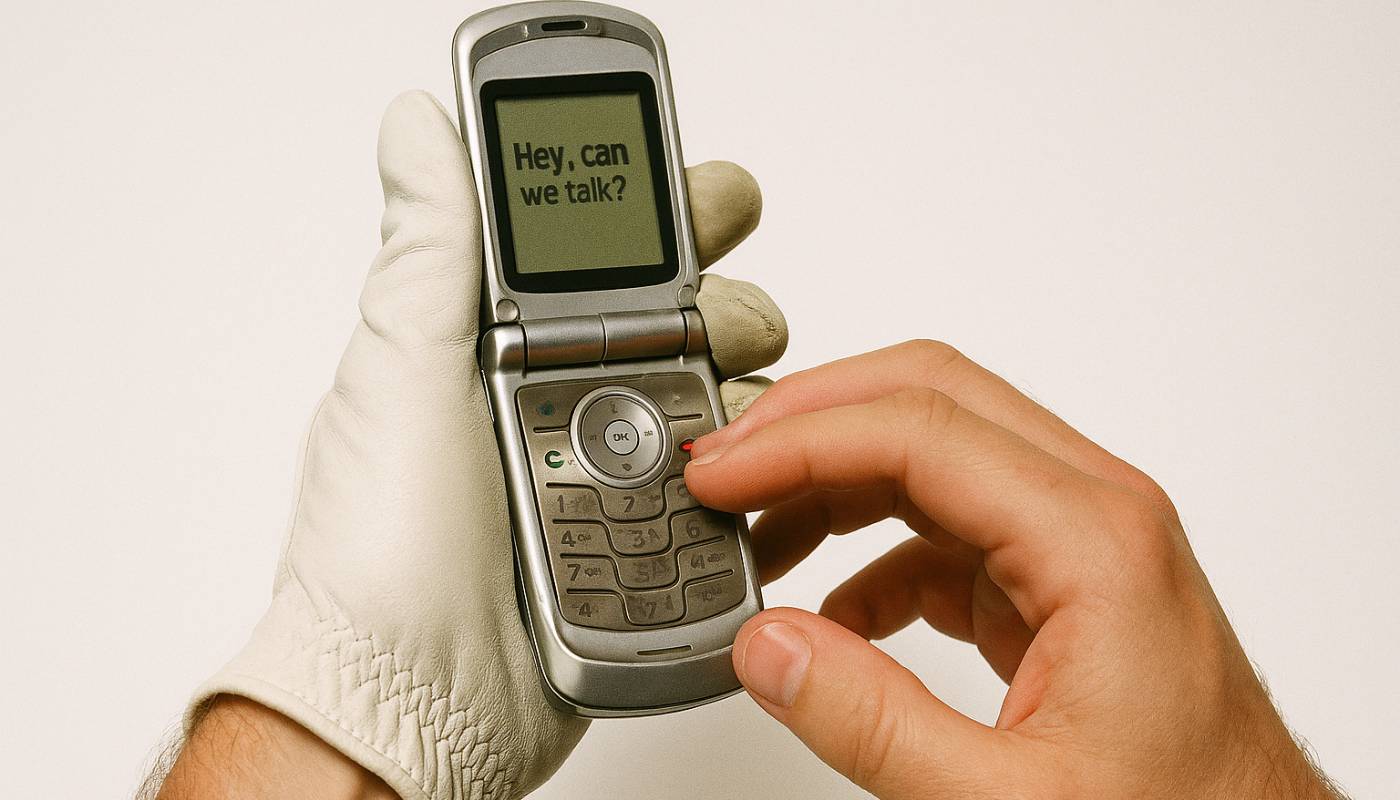
Message one person and suggest a walk, coffee, range session or round.
During it, ask one better question than usual, such as:
“How’s life been treating you lately?”
Then listen properly.
That last bit does most of the work. It also stops you from immediately turning the conversation into a detailed review of your bunker technique, which is growth.
{{divider-main="/content-templates"}}
4. Do something for someone else
Helping someone else can help your own head too.
This has to be said carefully, because nobody needs a motivational lecture about becoming a saint in a quarter-zip. The point is smaller and more useful than that.
Doing something for someone else gets you out of your own mental loop. It gives the day a bit of shape. It reminds you that you can have a positive effect on another person, even in a small way.
That matters.
It can also make connection feel easier, especially for people who find “talking about feelings” about as natural as chipping with a frying pan.
A small act gives the care somewhere to go.
Send a message. Make someone a cup of tea. Give a lift. Carry a bag for a hole. Introduce a new member. Check in on someone who has gone quiet. Help someone find their ball even though everyone knows it has entered a different legal jurisdiction.
Small acts count.
Nobody is asking you to build a hospital between tee times.
Try this:
Do one useful thing for someone this week without making a big production of it.
A quiet message. A favour. A check-in. A small bit of human decency slipped into the day like a Pro V1 found in the rough and placed gently into your pocket by destiny.
{{divider-main="/content-templates"}}
5. Spend time outside on purpose
Golfers spend plenty of time outside, but there is a difference between being outside and actually noticing it.
You can walk 18 holes surrounded by trees, sky, birds, wind, grass, light, clouds, and the gentle sound of your playing partner blaming his new grips, while your brain is still indoors arguing with an email from 11:43am.
The useful bit is noticing where you actually are.
The light. The air. The smell of cut grass. The feel of the club in your hand. The way the course looks when the sun drops a little and everything becomes suspiciously peaceful for a sport that regularly ruins lives before breakfast.
This helps because attention is trainable. When your mind is racing, pulling attention into the body and the world around you can give it a brief break from the usual loop.
Nature helps too. Green space, daylight, fresh air, movement, and a bit of distance from screens all help more than we tend to admit.
Golf has these built in, which is handy, given the sport also includes water hazards, three-putts, and men explaining compression.
Try this:
Next time you are outside, take two minutes and notice:
Five things you can see.
Four things you can hear.
Three things you can feel.
Two things you can smell.
One slow breath.
Yes, it sounds a bit worksheet-ish. Give it a try anyway.
{{divider-main="/content-templates"}}
6. Learn something new
Learning gives your brain something new to chew on, which is a relief when it has been gnawing the same old worries all week.
It can be golf-related: a new short-game shot, a putting drill, a bit of course architecture, or finally understanding why your grip keeps changing the moment pressure appears, like some kind of haunted hand arrangement.
It can also have nothing to do with golf.
Cook something new. Fix something in the house. Learn a language. Read about a topic you keep pretending to understand. Pick up a small skill for the mild satisfaction of being a beginner again.
The point is progress, not mastery.
Adults often avoid being beginners because being bad at things can feel undignified. Golf should have cured us of that by now. Every golfer is already involved in a long-term public experiment in being humbled by physics.
You do not need to become good. Even a tiny bit of progress can make the week feel less stuck.
Try this:
Choose one small thing to learn this week and give it 15 minutes, twice.
Keep it small enough to start, but interesting enough to make your brain sit up slightly and say, “Oh, we’re doing this now.”
{{divider-main="/content-templates"}}
The short version
Looking after your mental wellbeing can be simple.
Sleep at regular times. Move a bit. Speak to someone properly. Do one useful thing for another human. Go outside and actually be there. Learn something small.
It looks boring because the most helpful things often do. Annoying little feature of being alive.
Think of it like course maintenance. Nobody claps when the greens staff do the quiet work properly, but everyone benefits when the course is in good condition.
Your head works a bit like that too. Look after the basics often enough, and life usually becomes a little easier to play.
{{divider-main="/content-templates"}}
Note: These are wellbeing habits, not a substitute for proper support. If you have been feeling low, anxious, overwhelmed, unsafe, or unlike yourself for more than a couple of weeks, it is worth speaking to your GP or a mental health professional.
If you have concerns about your mental health or well-being, please speak to a qualified health or mental health professional.


.avif)





.jpg)


.avif)