%20(13).avif)
.avif)

.jpg)
Across conversations with familiar faces and regular male golfers on the Fairways and Feelings podcast, we’ve heard about panic attacks, debt, grief, loneliness, pressure, friendship, and the strange magic of talking while walking down a fairway.
This article is us taking a step back from those conversations and asking what we’ve learned so far.
The same thing kept turning up: men do talk. Often more honestly than they expected. They just rarely do it by sitting opposite each other under strip lighting and announcing, “Right lads, time for vulnerability.”
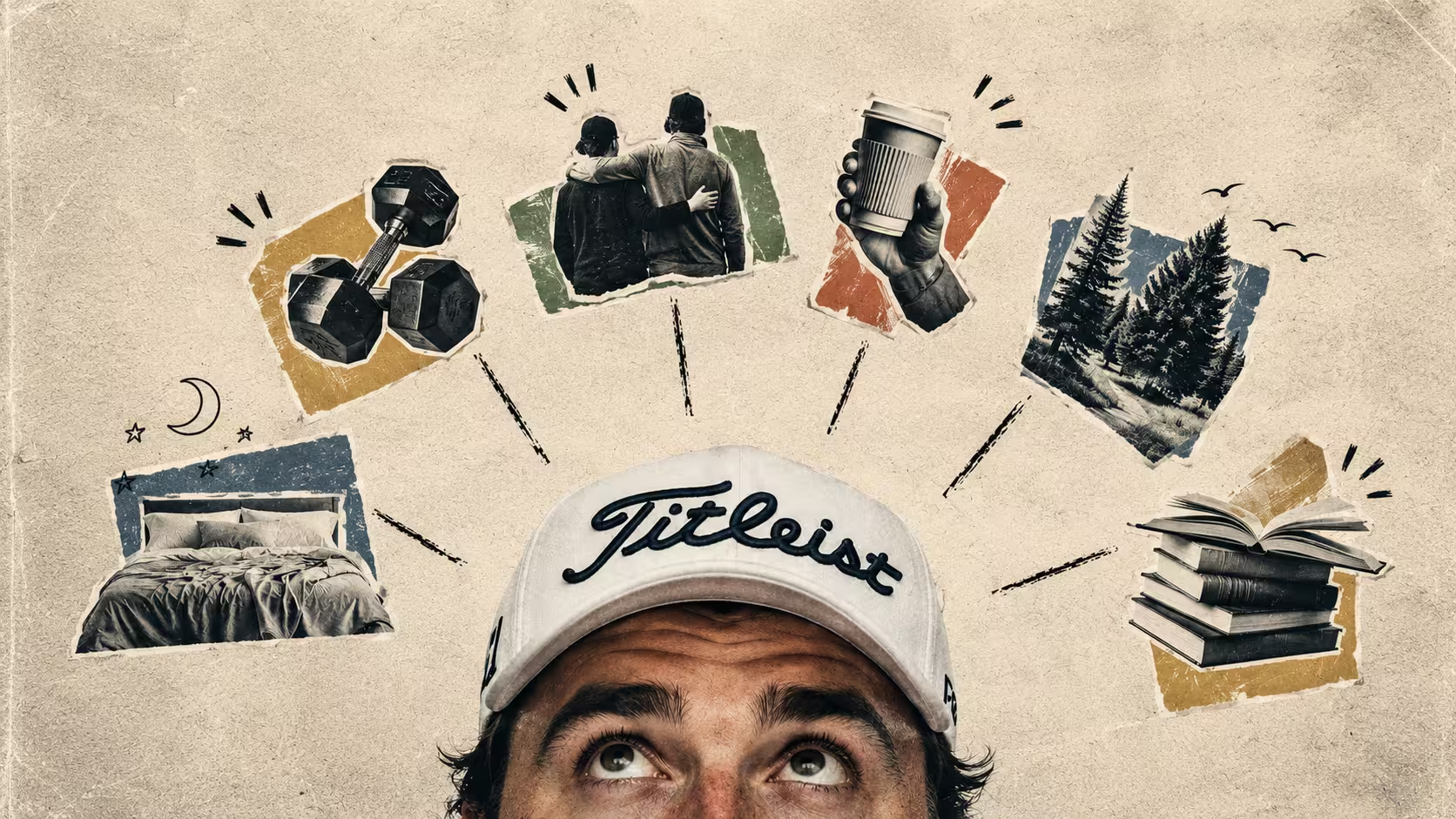
More often, it happens sideways. In a car park after the clubhouse has shut. Over a coffee after nine holes. In a text that pretends to be about playing next week, but is actually doing a bit more work than that.
Quick takeaways
What the golf world taught us about going first
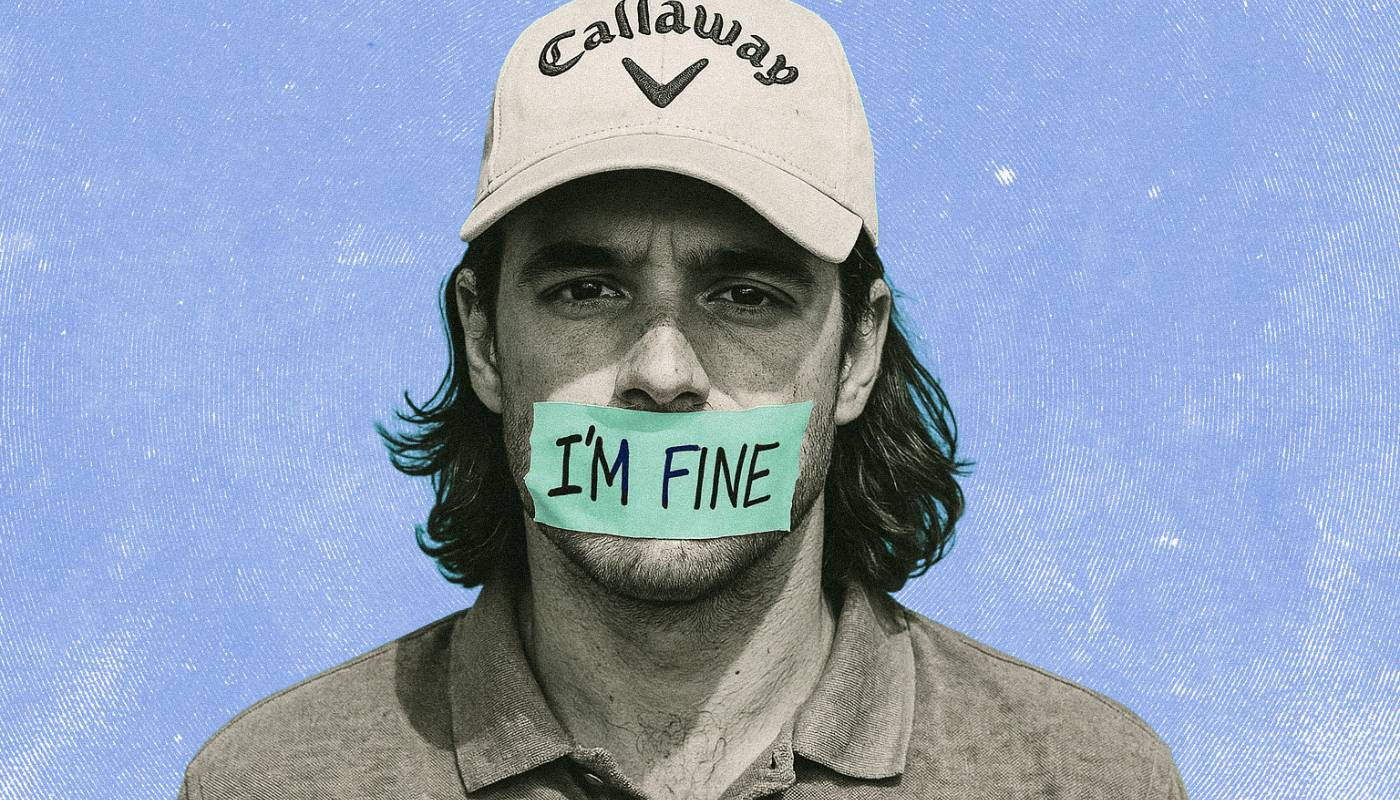
You can stand on the first tee and give your fourball a forensic breakdown of what's wrong with your grip, your takeaway and your alignment. Ask those same three how they're actually doing and you'll get "yeah, fine" three times over. We are fluent in the language of the slice and completely mute on the subject of ourselves.
That gap is what the men we spoke to keep circling. Rikki, a golfer from South England, clocked it in a car park: four mates, a round just finished, clubhouse shut, nowhere to sit. So they stood about on the gravel and ended up saying things they'd not said in years. He drove home thinking: if four hours of golf can prise that out of grown men, what else can it do? The answer was Foreheads Golf, a social media brand focused on men’s mental health.
Sam, a 17-handicap from Kent, had hidden a pile of debt for months, shoving statements in a drawer, certain the day it surfaced would be the worst of his life. Instead, it was the turning point. He told his partner, told work, then got on the phone to the banks and put his hand up. The relief landed almost straight away, not because anything was fixed, but because he'd stopped carrying it on his own.
Lee Antony, honest about gambling and anxiety, reckons getting something off your chest is one of the most relieving feelings going, and the only way to learn that is to try it.
This week: send a text. “Been having a rough one. Fancy nine holes or a coffee?” It might not win any awards for prose. That is completely fine. It only has to open the door.
{{divider-main="/content-templates"}}
You Don’t Need A Crisis To Say Something
Dan, from Essex, spent years thinking you could simply decide to be happy, the way you decide to have a coffee. Life eventually made a fairly convincing counter-argument.
He now describes his mental health as a black dog. Some days it's a chihuahua you barely notice. Some days it's a Great Dane parked squarely on your chest, and you are not going anywhere. The dog never fully leaves, you just get better at managing it.
Tadd Fujikawa, who has spent real time in a dark patch himself, puts it another way: you won't always feel good, and that's allowed. Feel it. Just don't pitch a tent and move in.
The trap is the waiting, holding off until things feel officially bad enough to mention. But you don't spend a whole season hacking at a busted swing insisting it'll fix itself before you book a lesson. You just book the lesson. It’s time to think the same way about our heads.
This week: mention the thing before it needs a dramatic title. “Been a bit off lately” is a perfectly serviceable opening sentence. It will not win the Booker Prize, but it might get the job done.
{{divider-main="/content-templates"}}
Small Honesty Beats The Big Speech
On paper, Charlie Beljan had the lot: a dream career on PGA Tour card, a big easy smile, the whole picture. Off paper, he'd been holding a great deal in for years, because that was what he understood men were meant to do: keep it shut, keep performing, make sure everyone sees a man who's fine.
It came out anyway. Mid-round, leading a tournament, his body hit its limit, and what he later learned was a panic attack put him in an ambulance. He'd never heard those two words until a doctor said them that night. That smile had been working a lot of overtime.
He isn't the only one. Marco Penge, now on the PGA Tour, had a spell as a teenager where pressure curdled into something he couldn't steer. He withdrew from a tournament mid-event, told his mum he couldn't do it anymore, and stepped away for months. Nothing in the outside picture told you any of it.
This week: say the small version early. “Work’s been a bit grim.” “I’m not sleeping brilliantly.” “Money’s tight.” You do not need to arrive with a speech and three supporting documents.
{{divider-main="/content-templates"}}
Stick to the facts, not the highlight reel of your worst shots
Every golfer knows this one. You play a solid round, fairways found, a few putts dropped, not a ball lost, then thin one wedge into the 14th. Which shot does your brain loop at two in the morning? Not the four hours of quiet competence. The wedge. Every time.
Heads do this with everything. They file the bad stuff in high definition and quietly shred the evidence of you coping perfectly well.
Mike Lorenzo-Vera, who has done years of work with a sport psychologist, says the biggest thing he rebuilt was his sense of his own worth, and he did it in a boringly practical way: stick to facts. Not hype, not mirror affirmations, just facts. What kind of dad am I, actually? What kind of mate? What can I genuinely do? Facts, he says, don't lie. You just have to keep reminding yourself of the true ones.
This week: when the inner critic starts its highlight reel of your worst moments, answer it with evidence, not optimism. Note the times this month something was hard and you handled it anyway.
{{divider-main="/content-templates"}}
Golf is the reset, not the repair
For Marv, who came through a marriage breakup, job loss and a horrific dog attack inside two years, five hours on the course is the one place he can set the lot down.
For Ryan, who drives a truck and knows the silence better than most, the game handed back the conversations he'd been missing, so he now sits down for a coffee after every round: the round is the excuse, the coffee is the point.
Sam said his first range session was the first time in years his brain went genuinely quiet. John Paton put the worst year of his life, losing his mum, into building a glove brand in her name.
Not one of them claims golf is the cure. It isn't, and the men who've done the real work say so first. What it reliably is, is a reset.
This week: play the round, but clock what it's really handing you. Nine times out of ten it isn't the pars, it's the people.
{{divider-main="/content-templates"}}
If you're the mate on the other side
Most men don't want a counselling session from their fourball. They want a mate who notices. You don't need the right words: the men we spoke to remember the gestures, not the speeches.
Keep turning up. Rikki's best mate never sat him down for The Big Talk. He just kept saying "come on, let's go and do something," until the doing of things became the lifeline. Marco's caddy became the bloke he texts on a bad morning, the one who tells him it's fine to skip the range and go tomorrow.
Offer time, not advice. After Stuart Appleby lost his wife, a friend rang him every night to ask him round for a meal. The answer was no for months. Then one night it was yes. That standing, no-pressure invitation was what did it.
Ask twice. "You alright?" gets a reflex "yeah, fine". Rikki admits he's the worst culprit for it. So ask again, properly, and mean it.
And a roast on the porch counts. Ryan’s brother never asked whether he fancied dinner. He just cooked a Sunday roast every week and left a plate by the door for Ryan to grab on his way home. Small, practical, no fuss, and often the bit that lands hardest.
{{divider-main="/content-templates"}}
A call-to-action for male golfers struggling with mental health
This Men’s Health Week,we’re not asking you for a big move; to fix everything in one swing or listen to a big lecture about how to fix your head (thank God). Instead, take the small lessons from these 13 conversations across the world of golf. Conversations that have taught us about how men talk, how they avoid talking, and what tends to happen when one of them finally goes first.
So regardless of where you are in your journey, take that first step. Send that text. Book that round. You’ll likely find a hand waiting to help you on the other side of the conversation.
{{divider-main="/content-templates"}}
If any of this is sitting close to home, please don't wait for it to get worse. Talk to someone you trust, speak to your GP, or look at the support listed on Healthy Minds Golf Club. If things feel urgent, you can call Samaritans free on 116 123, any time of the day or night.
If you have concerns about your mental health or well-being, please speak to a qualified health or mental health professional.






.jpg)


.avif)