%20(13).avif)


.jpg)
Let start with some maths.
A fourball, four-and-a-bit hours, and the plain fact that 1 in 4 of us will encounter a mental health challenge in any given year. Spread those odds across a Saturday tee sheet and most fourballs are carrying one man who is quietly having a rough time of it. And it is not always the man you would guess. A good job, a low handicap, money in the bank: none of it makes anyone immune. Plenty of men are doing well on paper and struggling underneath.
Some will say something. Most will not. They will book the tee time, find a parking space, ask who has the honour, and carry on as normal.
Golf gives us a rare thing: time together without too much pressure on the conversation. No one has to sit under strip lighting and announce they would now like to discuss their inner life. You are just walking, waiting, looking for a ball that was definitely heading middle-left until the trees became involved.
The question shouldn't be whether golf can be good for us. Most golfers already know that, even if they just call it "getting out for a hit." The better question is whether we notice what the round is giving us.
Quick takeaways
Mostly, it means paying attention
Nobody wants a counsellor on the tee. You're not there to diagnose anyone on the front 9, and nobody is asking you to become the club therapist. The job is smaller and a good deal easier than that, and it all comes down to paying attention; being present.
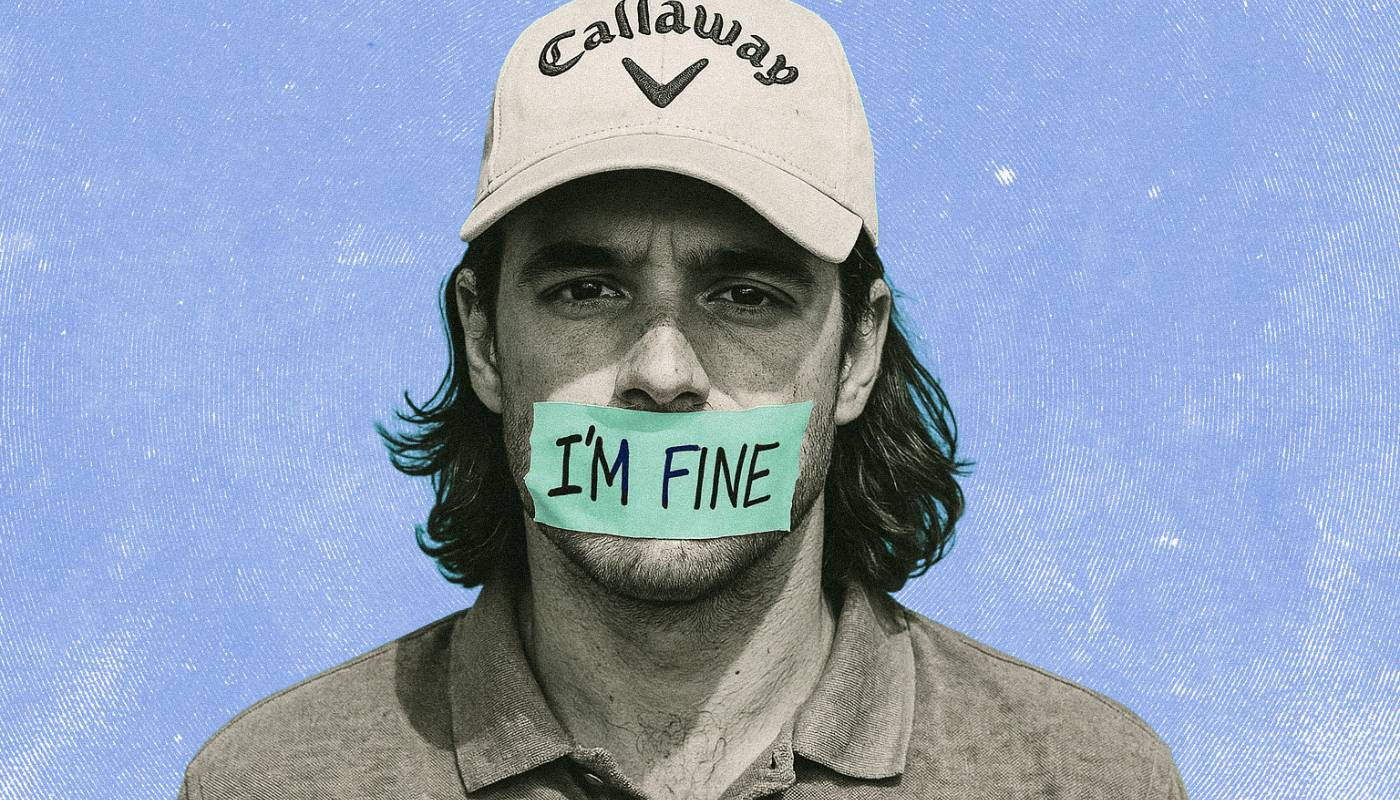
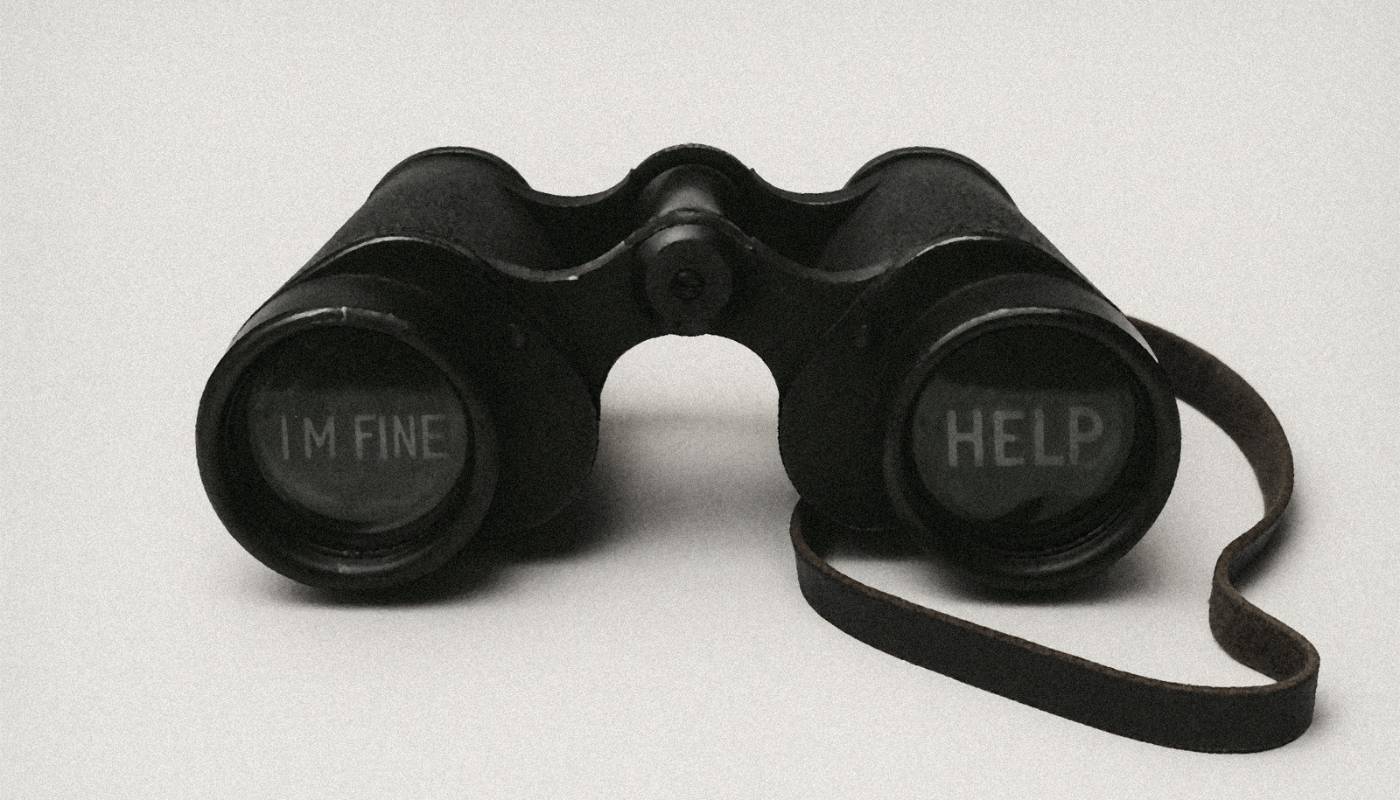
Notice when the mate who normally won't stop talking about his short game has gone quiet for nine holes. Notice when the phrase "I'm fine" is doing more work than usual. Notice the half-thing someone mentions on the 11th, the line about work, or home, or not sleeping.
These are the moments someone could be wanting to talk, and as a golfing community we could be better at welcoming those conversations. The best fourballs are not the ones with the lowest scores. They are the ones where, now and again, the talk gets past golf, work and whatever happened in the football, and onto how someone is actually doing.
A lot of the men we have spoken to who came through hard spells almost never point to a grand intervention. They point to someone who simply clocked that they were not themselves, and stuck around. Someone who made it slightly easier to say the first honest sentence.
{{divider-main="/content-templates"}}
The bit after the round
The round itself is not always where the real conversation happens. Sometimes it is. More often, the actual stuff tends to turn up afterwards, in the car park, over a coffee, somewhere in the slow business of settling the match. Which is precisely the moment most of us choose to announce we had better get off, and sling the clubs into the boot.
So if you change one thing, make it this. Do not disappear the second the scorecard is signed. Stay for the drink. Sit down. Leave a gap long enough for something to land in. Honest conversations between men are rarely summoned on command. They are usually given just enough room to turn up.
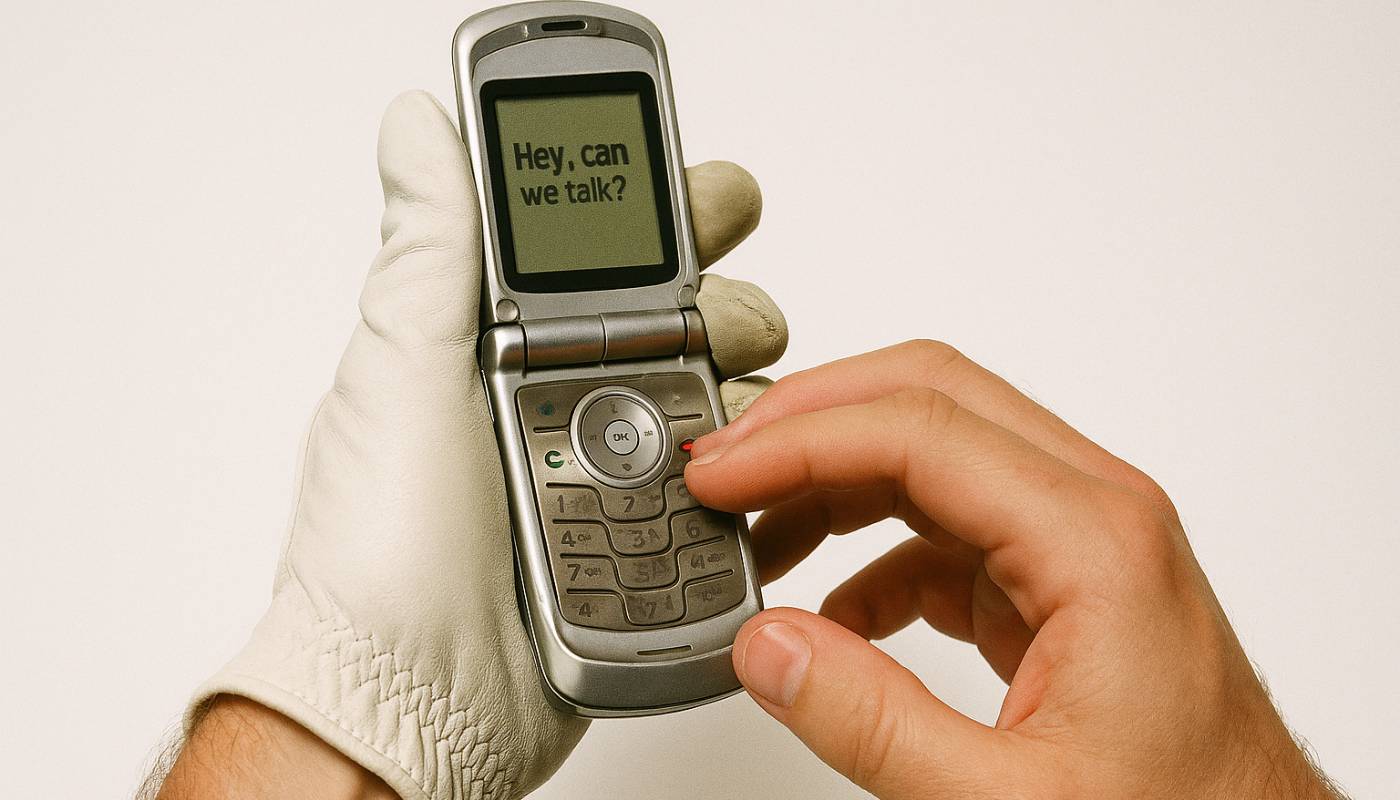
And if nothing turns up, fine. You have had a coffee. Society will recover. The four hours do not expire on the 18th. If someone seemed off and the moment never quite appeared, send the text later.
"Good to see you today. You seemed a bit quiet. Everything alright?"
Ten seconds. No big speech. No dramatic music. Just a door left open.
{{divider-main="/content-templates"}}
If it is you carrying it
The same four hours work both ways. You do not have to make a speech on the first tee, and you certainly do not have to wait until things are properly bad before you are allowed to mention them. Most useful conversations start smaller than that.
"Bit of a rough one at the minute, if I am honest."
Most men feel they should fix everything themselves, and many wait until crisis point before making the first move. But opening up is not complaining, and it is not weakness. It is doing something constructive about a problem, the same instinct that makes you book a lesson rather than stew over a slice for a whole season. Don’t wait until you’re at breaking point. Early support often leads to better outcomes. Coaching, counselling, therapy, peer groups, and talking to a GP can all be helpful before things become severe. Asking for support early is, if anything, the strongest move.
It also helps to notice your own patterns. Think back to the last time you were down. How did you respond? Was it drinking, gambling, scrolling? Understanding how you react to adversity is the first step to spotting the challenge itself. The next time you feel yourself slipping into that habit, you are better able to name the root cause, question it, and respond differently.
{{divider-main="/content-templates"}}
Sort the boring basics where you can
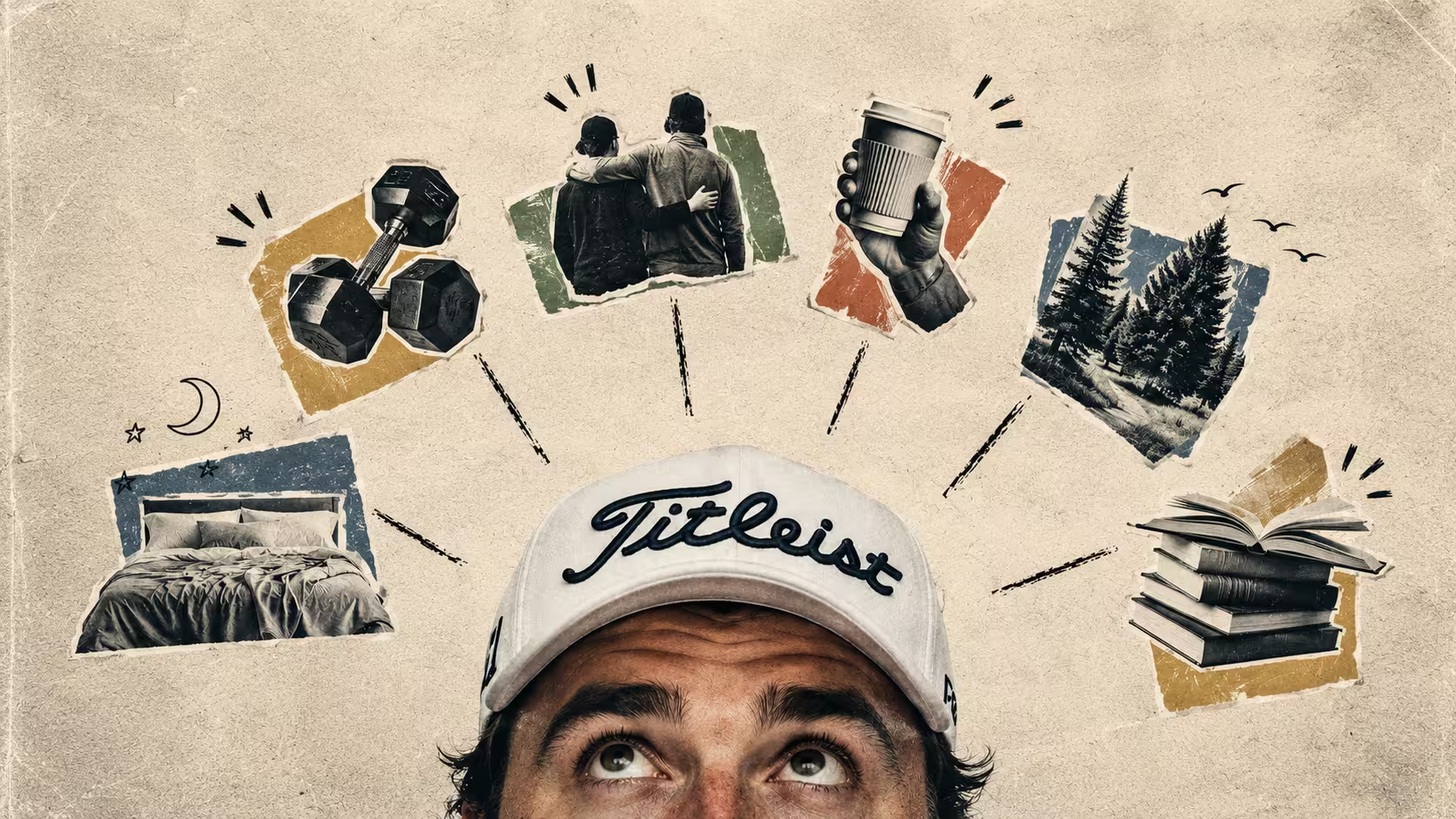
A round of golf is a decent way to bundle a few of them together. Sleep, daylight, movement, decent food, and going a bit easier on the drink. It sounds like a fridge magnet, but a low mood sitting on top of five hours' sleep and no exercise is a very different problem to solve than the same mood with those handled. Fix the boring inputs before deciding the wiring is broken.
While you're at it, protect the things that actually recharge you. Golf is one. So is whatever else does the job: getting outdoors, music, minimal screen time, a proper book, time with people you like. They are not luxuries to drop the moment life gets busy. They are maintenance.
{{divider-main="/content-templates"}}
And do not wait until breaking point. Early support tends to lead to better outcomes, and there is more of it about than men assume: a coach, a counsellor, a therapist, a peer group, or simply your GP. None of it has to wait for a crisis. If you, or the man you keep half-thinking about, is really struggling, a GP is a sensible first call, and Samaritans are there any hour of the day on 116 123.
If you have concerns about your mental health or well-being, please speak to a qualified health or mental health professional.

.avif)




.jpg)





.avif)